
Bitesize Acoustics - Sound Insulation Core Principles (Direct Sound Transmission)
Sound insulation is often misunderstood. It is not achieved through a single product or “acoustic material” - it is the result of how a wall or floor system is designed as a whole.
In practice, acoustic design is often required to achieve compliance with building regulations, planning conditions, or employer requirements, including Approved Document E, BB93, HTM 08-01, BCO guidance, BS 8233:2014 and BREEAM.
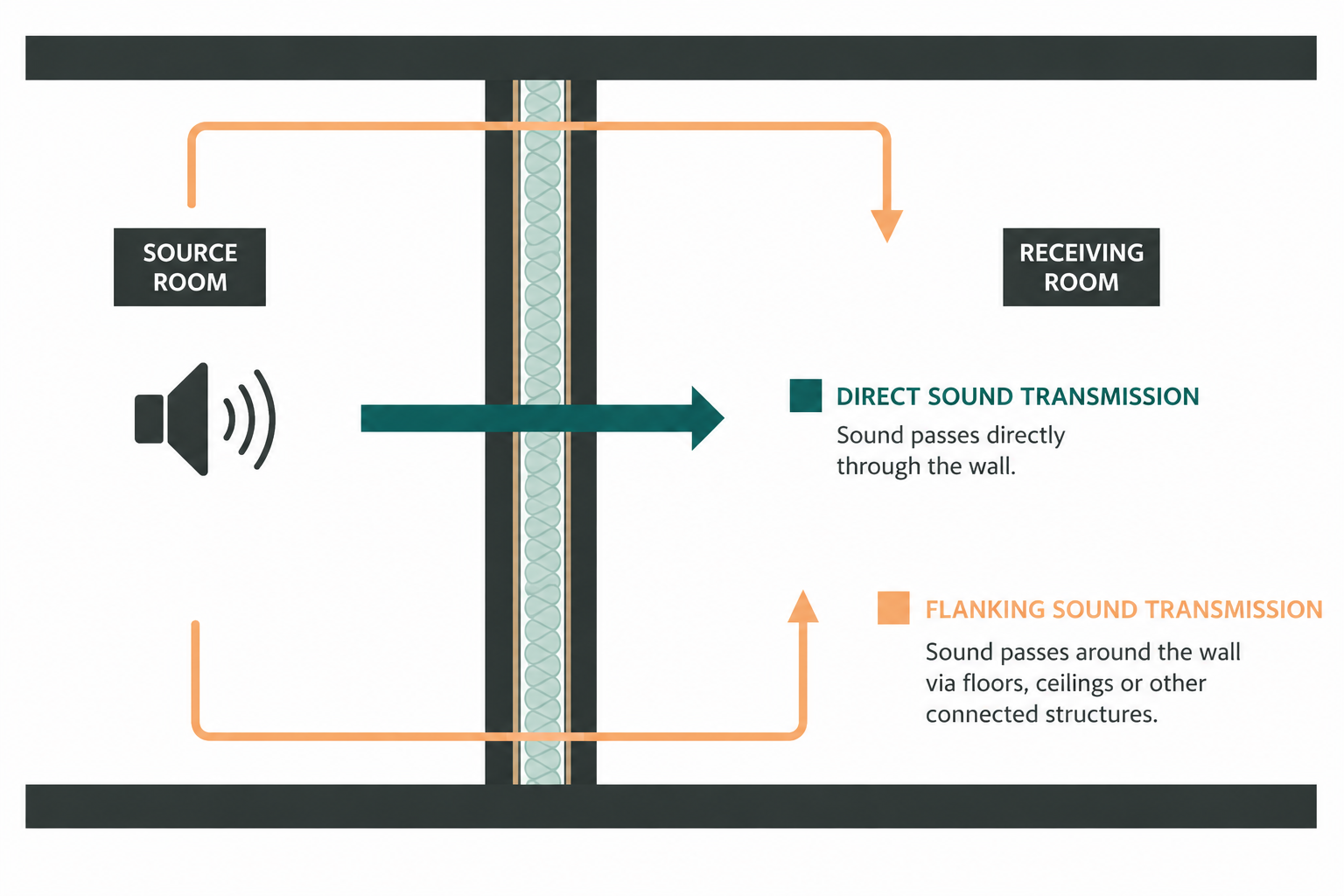
This article is going to focus on direct sound transmission. The image below demonstrates the difference between direct sound transmission and flanking sound transmission.
There are four core principles that govern how well a partition performs when considering direct airborne sound transmission:
Absorption
Isolation
Mass
Air tightness
In this article, we take a simple wall construction and progressively improve its sound insulation performance using these four principles.
It should be noted that this article focuses on direct sound transmission only. Other important factors such as flanking transmission, junction detailing, doors and service penetrations can significantly influence overall performance and should be considered as part of a full acoustic design by a suitably qualified acoustician.
1. Absorption
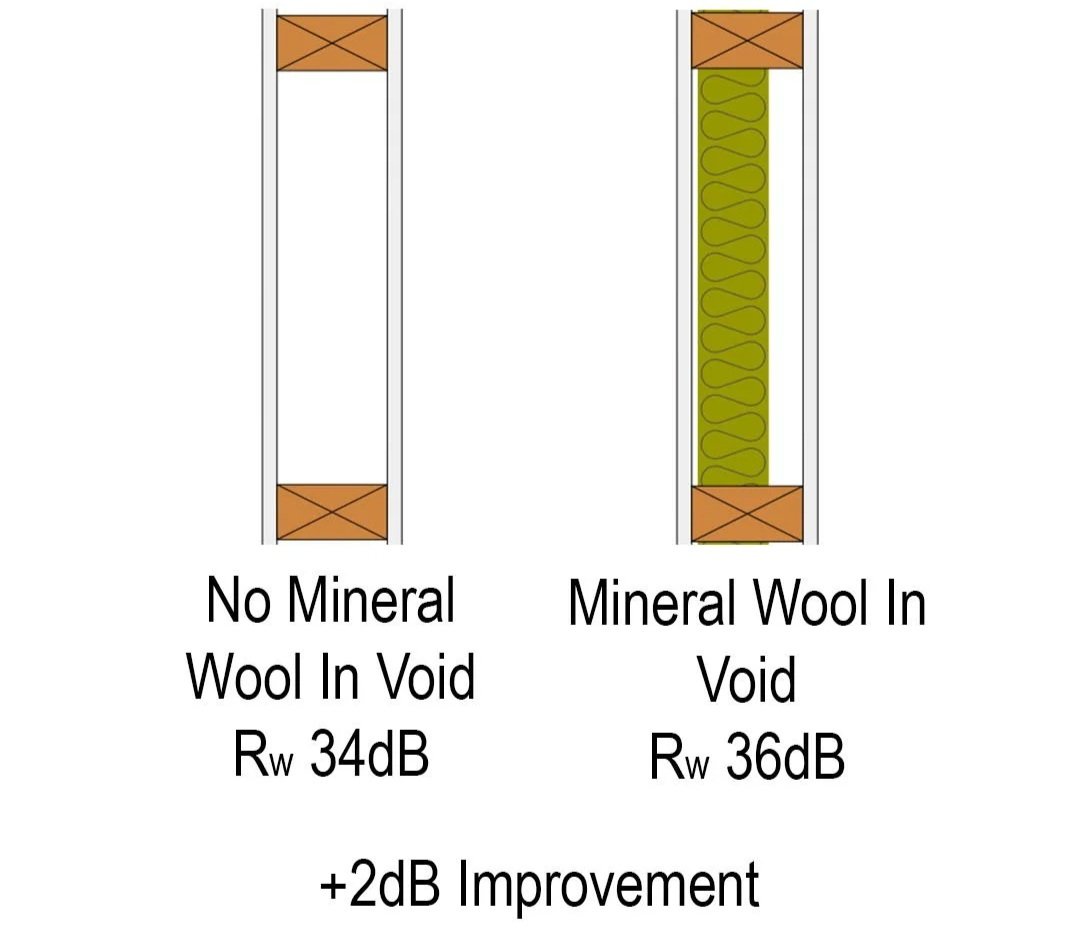
Absorption materials such as mineral wool are used within the cavity of a wall to reduce sound energy within the void.
In an empty stud wall, sound can resonate within the cavity, effectively amplifying transmission. Introducing mineral wool disrupts this by absorbing mid-to-high frequency sound energy and reducing internal reflections.
It is important to understand that mineral wool does not “block” sound - it improves performance by reducing resonance within the cavity.
2. Mass
Mass is one of the most fundamental principles of sound insulation.
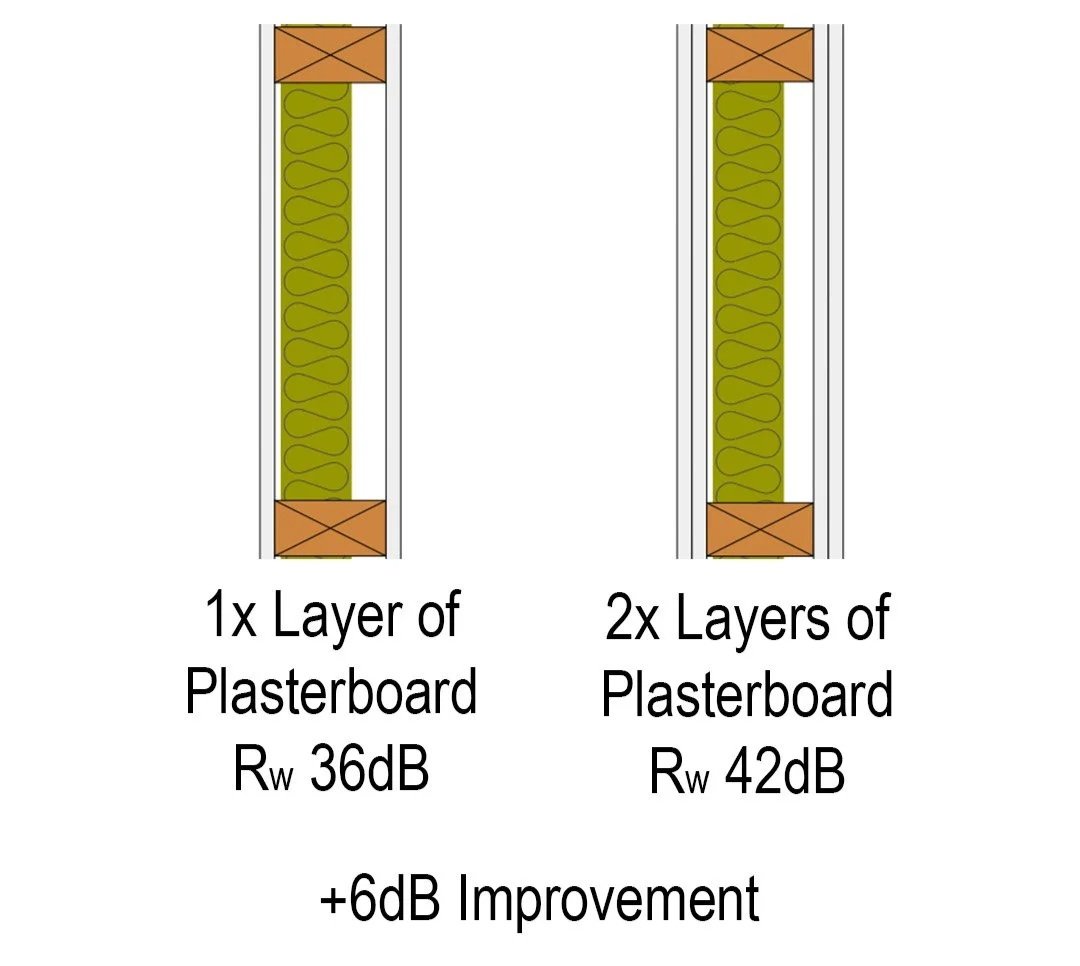
Heavier materials have a higher density, meaning less sound energy is transmitted through them. This is why adding additional layers of plasterboard or blockwork significantly improves performance.
The mass law states that increasing the mass of a wall improves sound insulation, with a doubling of mass typically increasing performance by around 6 dB, although this may not always be the case in some instances.
3. Isolation
Isolation refers to physically separating elements of a structure to reduce sound transfer.
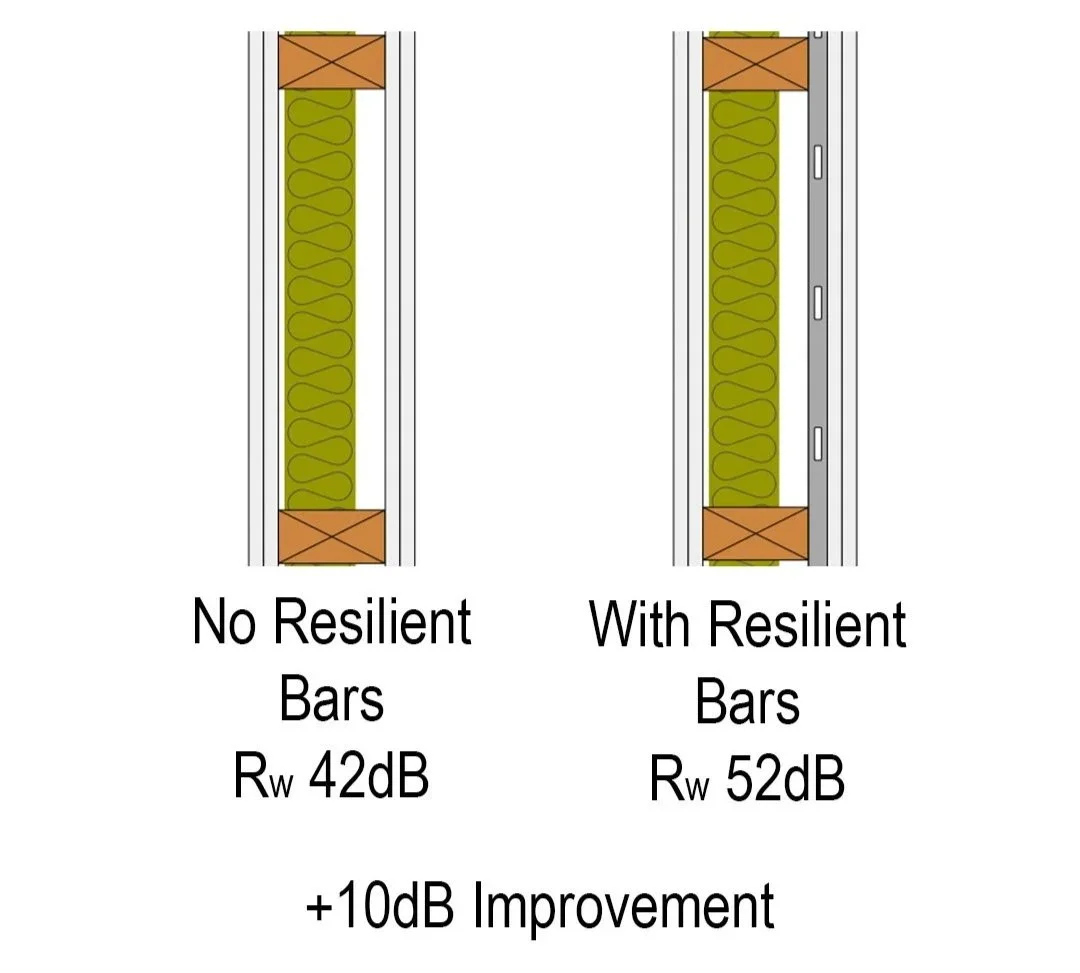
In a standard stud wall, plasterboard is fixed directly to the studs, meaning sound resonates within the structure as it is rigid in nature. By introducing resilient bars (or other decoupling systems), the plasterboard lining is isolated from the structural frame, allowing for resonances to be reduced.
This reduces structure-borne transmission, reducing resonance and is particularly effective at improving low-frequency performance.
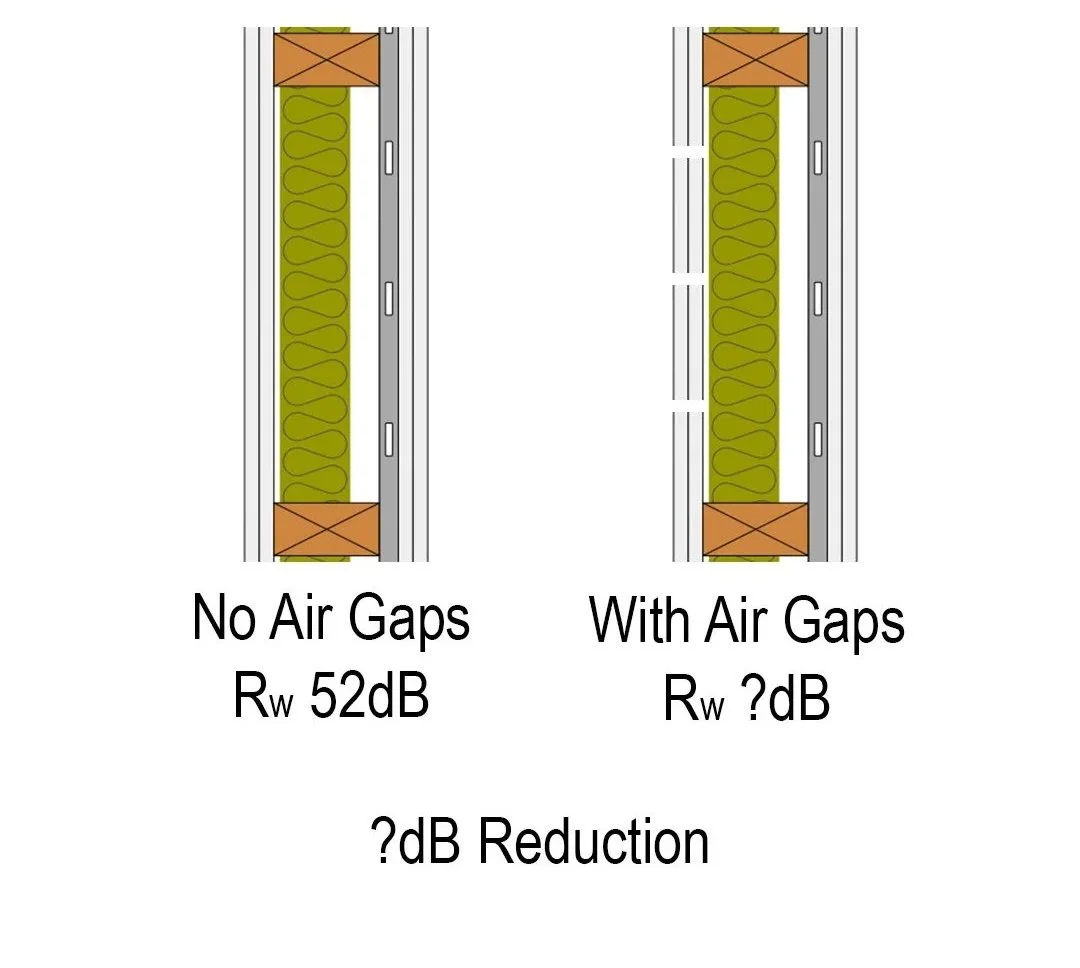
4. Air tightness
Even a well-designed wall can fail if there are gaps.
Sound will always take the easiest path, and small openings - around sockets, at junctions, or due to poor workmanship - can significantly reduce overall performance.
Air gaps allow direct airborne sound transmission, bypassing all the improvements made through mass, absorption, and isolation.
It’s important to seal air gaps appropriately to reduce sound leakage through the wall.
We hope you found this article useful. If you need assistance with sound insulation design on your next project, please get in touch: info@atomacoustics.co.uk
Find more information about our building acoustics services here.